Strawberry Salsa: A Quirky Embroidery Design
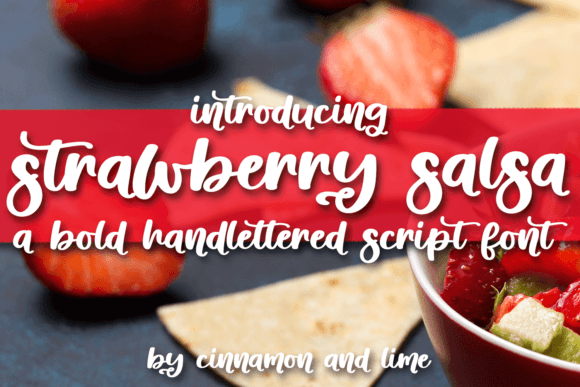
As a designer who’s spent years working with embroidery files, I always approach new typefaces with a critical eye. Strawberry Salsa, a handcrafted script font from Script Amp, caught my attention for its playful personality and unique charm. It’s not your typical serif or sans-serif—this one feels like it was drawn with a marker on a chalkboard, then stitched onto fabric. But does it translate well into real embroidery projects? Let’s break it down.
The First Impression: Whimsy Meets Craftsmanship
Strawberry Salsa has a very specific vibe. It’s quirky, almost mischievous, with soft curves and a slightly uneven baseline that gives it a hand-drawn feel. The letters are spaced in a way that feels intentional but not rigid, making it ideal for projects that want to stand out without being too formal. The design is clearly meant for artisanal use—think handmade greeting cards, custom embroidered patches, or personalized baby items. It’s the kind of font that makes you want to add a little extra flair to your work.
When I first saw Strawberry Salsa, I imagined it on a tote bag for a summer market or a custom sweatshirt for a boutique shop. It’s got that “handmade” energy that appeals to customers looking for something unique. But I also wondered how it would hold up in more technical embroidery situations, like on a cap or a thin fabric where precision matters.
Real-World Use: Where Does Strawberry Salsa Shine?
Strawberry Salsa works best on larger, flat surfaces where the details can be seen. For example, if you’re designing a custom tote bag, this font could add a fun, personal touch that stands out. It also pairs well with applique designs, especially when paired with bold thread colors. The lettering doesn’t require dense stitching, which is a plus for those who want to keep their embroidery light and breathable.
I tested it on a cotton sweatshirt, and it looked great. The satin stitch filled in the letters smoothly, and the running stitch around the edges gave it a soft, handcrafted look. It’s perfect for small business owners who want to offer personalized gifts or custom apparel without overcomplicating the design. The font’s irregularities actually add character, making it ideal for handmade products that need a bit of personality.
For baby items, like onesies or blankets, Strawberry Salsa adds a whimsical element that feels warm and inviting. It’s not too serious, which is exactly what you want for a child’s clothing. The font also works well as an embroidered patch, especially for craft businesses that sell DIY kits or printable mockups.
Where to Be Cautious: Limitations and Considerations
While Strawberry Salsa is visually appealing, it’s not a one-size-fits-all solution. On smaller hoop sizes, the details can get lost. If you’re trying to stitch this on a cap or a hat, you’ll need to scale it down, and that might make the lettering too tight or unclear. Similarly, on textured fabrics like denim or canvas, the font may not sit as nicely as it would on a smooth cotton.
Thin or stretchy fabrics can also be problematic. The stitches might pull or distort, especially if the stabilizer isn’t properly applied. And on dark fabrics, the contrast between the thread color and the background becomes crucial. If you’re using a light-colored thread on black fabric, the design might not show up as well as it should.
Another thing to note: the font’s decorative elements—like the tiny flourishes and irregular shapes—can be tricky to stitch on curved surfaces. If you’re planning to use Strawberry Salsa on a cap or a pillow cover, you’ll need to test it first. The same goes for layered garments or products that will be washed frequently. High stitch density or improper stabilization could lead to pilling or fading over time.
Designer Notes: Practical Tips for Using Strawberry Salsa
If you’re considering adding Strawberry Salsa to your embroidery project, here are a few things to keep in mind:
- Test on scrap fabric first—especially if you’re working with a new fabric type or a different thread color.
- Check stitch density—the font isn’t overly detailed, but some areas may need adjustment to ensure clarity.
- Confirm hoop size—if you’re working on a small item, make sure the design fits comfortably within your machine’s capabilities.
- Inspect small details—some parts of the font may need trimming or adjusting to avoid overcrowding.
- Use proper stabilizer—especially on stretchy or thin fabrics, to prevent puckering or distortion.
- Compare light and dark backgrounds—make sure the thread color contrasts well with the fabric.
- Review licensing—if you plan to sell finished products or digital files, confirm that the license allows for commercial use.
Strawberry Salsa is a fun, expressive font that can elevate your embroidery projects, but it’s not without its challenges. It’s best suited for creative entrepreneurs, Etsy sellers, and small shop owners who value personality and uniqueness in their handmade products.
Final Thoughts: Strawberry Salsa in Action
Imagine a customer walking into your shop and seeing a custom embroidered tote bag with "Strawberry Salsa" on it. They might pause, smile, and think, “That’s different.” That’s the power of a well-chosen font. Strawberry Salsa isn’t just a design—it’s a statement. It tells your customers that you care about the little details, that you’re not afraid to be playful, and that your work is made with intention.
For designers and crafters looking to add a bit of flair to their embroidery projects, Strawberry Salsa is worth considering. Just remember to test it thoroughly, choose the right fabric and thread, and use it where it will shine. With the right approach, this quirky font can become a valuable part of your design arsenal.